LEARN FROM THE WORK AREA · UPDATED 17 OCTOBER 2026
Good POWRA. Bad POWRA. Same job. Different conversation.
A point-of-work risk assessment should help the people doing the job recognise what could hurt someone—and check what needs to be in place before they start.
Here is one fictional work area. See how a vague record becomes a useful conversation about the task, the team and the conditions in front of them.
First, look at the work area
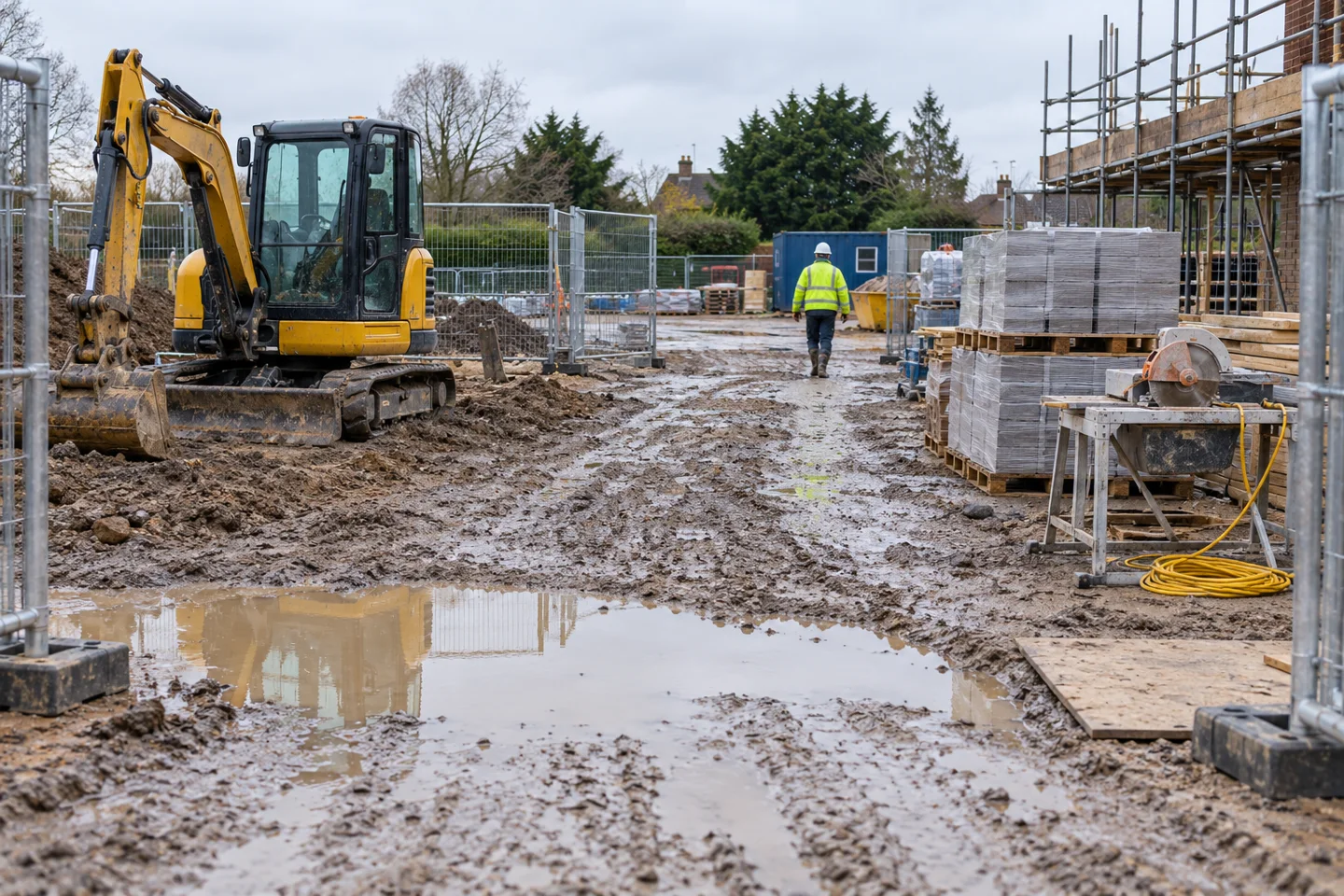
AI-generated training image. This is not a real site inspection or a complete assessment. Visible prompts are examples; a photo cannot show every hazard or verify a control.
Proposed task: prepare a block-cutting work area beside the building. Before setting up or using the equipment, the team checks access, nearby plant, the proposed cutting method and who else may enter.
What would you ask? Tap a topic.
1. Wet ground and the access route
Visible prompt: mud and standing water on the route.
Ask on site: where will people carry materials or walk? Is the surface suitable, and is there a suitable alternative route? Could water hide uneven ground? Check the actual route rather than writing “watch your step”.
2. Plant and people sharing the area
Visible prompt: an excavator beside an access area.
Ask on site: is plant due to operate during this task? Who controls the area, and how will people be kept out of its operating space? A parked machine in a picture does not confirm the arrangements for the next delivery or movement.
3. The saw, lead and cutting method
Visible prompt: a saw bench, block packs and a coiled lead.
Ask on site: is this equipment suitable for the planned job? Have condition, guarding, supply and lead routing been checked? What prevents exposure to cutting dust, noise and contact with moving parts? The photograph cannot establish inspection status, competence or effective controls.
4. Other trades and people entering
Visible prompt: fencing, an entrance and someone further into the site.
Ask on site: who could pass through or work nearby? Check deliveries, other trades, visitors and any public interface. Establish who coordinates access and what changes if someone needs to cross the work area.
Compare the record—not just the number of ticks
WEAK / BAD EXAMPLE
“Blockwork. Usual hazards. Wear PPE. Low risk.”
Task: copied from yesterday.
People: “operatives”.
Controls: “be careful” and “PPE worn”.
Checks: all ticked without looking at the area.
Changes: no action when a delivery arrives or the route becomes muddy.
It says very little about this job, who is exposed or what has actually been checked. A low score does not fix that.
USEFUL / GOOD EXAMPLE
“Prepare the cutting area at the east side of the building.”
People: the cutting team, nearby trades and delivery personnel who may use this access.
Findings: the access is muddy; plant coordination and cutting-equipment arrangements still need confirming.
Next action: the supervisor will confirm a suitable route and plant/access arrangements; the competent equipment user will check the saw setup and cutting controls before use.
Decision: do not start the affected activity until the outstanding arrangements have been resolved, checked and explained to the team.
Specific, honest and actionable. Missing controls stay missing until someone checks them.
These are examples of record quality, not a cutting method statement, traffic plan or permission to work. The “good” example deliberately records gaps. It is not a completed safe-to-start assessment, and it does not list every hazard or control.
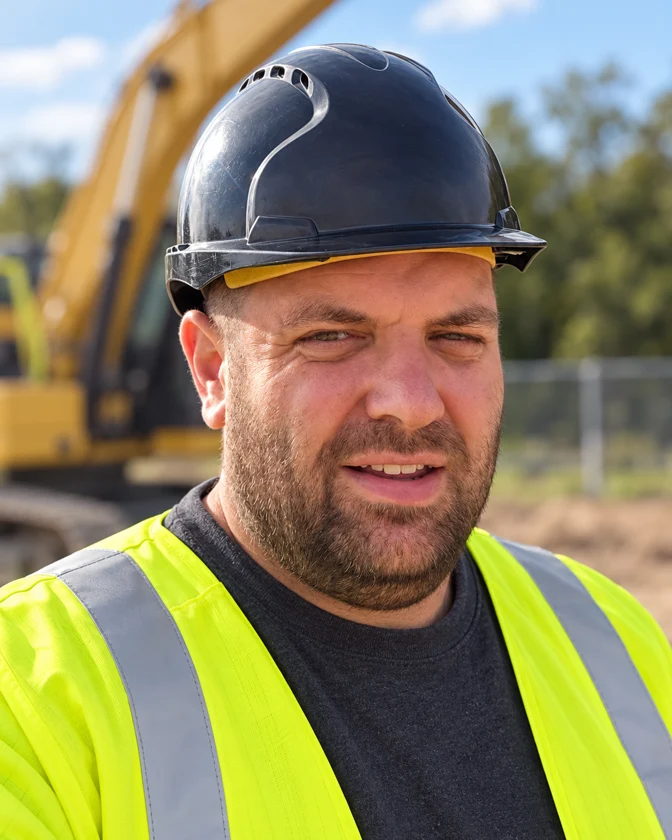
Lloyd Godsall Founder, POWRAlogic · Logic Suite
WHY THIS MATTERS TO ME
The point is to protect the people doing the job.
“In my 20 years in construction, I’ve seen a lot of poor-quality POWRAs. Often, the people completing them have simply never had proper training in how to use them, or been shown the difference between a good one and a bad one.
“These checks are there to protect the people doing the work and those around them. People need to understand what they are checking, why it matters and what to do when something is missing.
“When I see a poor POWRA, it prompts me to look more closely at the wider arrangements too: the risk assessments and method statements (RAMS), the construction phase plan (CPP), and whether the planned controls are understood and used on site.”
For Lloyd, a weak POWRA is a reason to ask more questions about training, planning and supervision. It is not, by itself, proof that every other document or arrangement is wrong.
Why do we do a POWRA?
Because the job described in the plan and the job in front of the crew can differ. A short check creates a chance to spot that difference before someone is exposed. The value is in the conversation and the practical action—not in producing another form.
It connects the planned work with the current place, equipment and people. It helps make unresolved actions visible and gives the team a shared reason to pause when arrangements are missing.
HSE describes risk assessment as identifying hazards, considering who could be harmed, choosing controls and reviewing them. Paperwork supports those actions; it cannot substitute for effective protection. Read HSE’s risk-management guidance.
Who does it?
The people doing the work should contribute their knowledge of the task and the work area. The employer or contractor must arrange competent assessment, suitable planning and supervision. A supervisor or nominated competent lead may coordinate the point-of-work discussion under the company’s process; the crew should understand the result and raise anything unclear.
An HSE investigation into work near live overhead lines found failings in risk assessment, planning and contractor supervision. Read what a point-of-work conversation may help surface—and where competent planning is essential.
Yesterday’s answers cannot tell you whether today’s arrangements still work. These are practical prompts to revisit the affected assessment:
Conditions: rain, wind, poor light, heat or changing ground/access.
Tools or materials: a different saw, attachment, supply, product or cutting method.
Plant: a new machine, delivery, route or operating area.
People: another trade, a new team member, visitors or someone entering the area.
The task: a change of location, sequence or scope, or an interruption.
A warning: a failed control, concern, near miss or unexpected condition.
For example, a delivery arriving through the cutting area changes the interface even if the cutting task itself has not changed. Pause the affected activity, check the new arrangement with the people responsible, update the record and explain the changes before continuing through the site’s agreed process.
If a real danger arises, stop the affected work and tell the team immediately. Do not wait for an app response. HSE advises reviewing controls when workplace changes introduce new risks or existing measures may no longer work.
How does that help prevent harm?
The aim is to interrupt the route from a hazard to a person: organise plant and pedestrian movements, provide suitable access, choose an appropriate work method and check the equipment and exposure controls. Include people outside the immediate crew as well as the task author. “Wear PPE” on its own does not explain those arrangements.
Some questions need a specialist, a permit, an isolation or a revised method. A POWRA helps identify that need; it does not replace the relevant RAMS, permits, competent advice or site procedures.
Five questions for the team before starting
What exactly are we doing, and where?
What could hurt us or someone nearby?
What controls are actually in place and checked?
What is missing, who will resolve it and by when?
What change means we pause and review again?
By Lloyd Godsall, Logic Suite. Built around clearer point-of-work conversations, practical checks and training that helps people understand what good looks like. Guidance links checked 17 October 2026; this page is not HSE-endorsed.
 POWRA